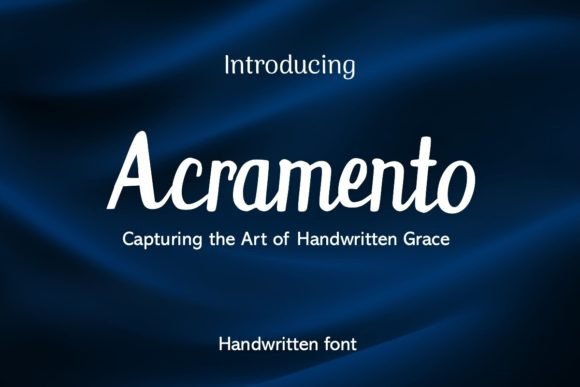
Acramento: The Handwritten Font with Timeless Sophistication
There's a particular quality to hand-lettering from the mid-20th century that digital fonts often struggle to capture. It's a warmth, a human imperfection, a sense that someone's hand actually guided the pen. Acramento brings that quality into your modern design toolkit. This isn't just another script font—it's a carefully crafted typeface that balances formal elegance with casual flair, making it versatile enough for both professional branding and personal projects.
Understanding Acramento's Visual Character
Acramento features a fluid, semi-connected script style. The letters flow into each other with a natural rhythm, but they don't form a completely connected cursive. This design choice gives the font structure while maintaining its handwritten feel. The letterforms show subtle variations in stroke width, mimicking the pressure changes of a real pen or brush. The x-height is generous, which improves legibility at smaller sizes—a practical consideration many decorative scripts overlook.
What sets Acramento apart from many contemporary handwritten fonts is its retro sophistication. You can see influences from 1950s and 1960s brochure design, where typography served both functional and artistic purposes. The font carries personality without sacrificing clarity. It feels personal but not overly casual, refined but not stiff. This balance makes it work across contexts where you need authenticity without compromising professionalism.
Where Acramento Shines: Practical Applications
Branding and Identity Work
For logo design and brand identity systems, Acramento offers a distinctive voice. It works particularly well for businesses that want to convey approachability with a touch of elegance—think boutique shops, artisanal products, creative studios, or hospitality brands. When used for a logotype, it creates immediate recognition and warmth. Pair it with a clean sans serif font for body text, and you have a brand system that feels both personal and polished.
Editorial and Publishing
In editorial design, Acramento excels as a display font for headlines, pull quotes, and chapter titles. Its semi-connected script adds visual interest without overwhelming the page. For magazines, book covers, or blog graphics, it creates focal points that draw the reader's eye. The font maintains readability at larger sizes, making it suitable for titles that need to work across print and digital formats.
Wedding and Event Stationery
This is where Acramento truly feels at home. Wedding invitations, save-the-dates, event programs, and thank-you cards benefit from its romantic yet legible character. The font captures the personal, handcrafted feel that couples want for their stationery while maintaining the formality appropriate for such occasions. It pairs beautifully with serif fonts for body text and ornamental elements for decorative borders.
Digital Marketing and Social Media
For social media graphics, email headers, and digital ads, Acramento adds personality that stands out in crowded feeds. Its handwritten quality creates an authentic connection with audiences tired of generic, overused typefaces. Use it for Instagram quotes, Pinterest graphics, or Facebook cover images where you want to convey warmth and approachability. The font renders well on screens, maintaining its character across devices and resolutions.
Packaging and Product Design
Product labels, packaging design, and merchandise benefit from Acramento's artisanal quality. For food products, cosmetics, crafts, or specialty goods, the font suggests handcrafted care and attention to detail. It communicates quality without appearing mass-produced—a valuable distinction in competitive retail environments.
How Typography Influences Perception and Engagement
Typography does more than display words—it shapes how audiences perceive your message. Acramento, as a handwritten font, triggers associations with authenticity, creativity, and personal connection. In a digital landscape saturated with geometric sans serifs and predictable serifs, a well-crafted script font like Acramento creates visual differentiation.
The font influences readability in specific contexts. While not suitable for long body text, Acramento performs admirably for short-form content—headlines, titles, calls to action, and decorative elements. Its semi-connected structure guides the eye along a natural reading path, while the generous spacing between letters prevents visual crowding.
For brand perception, typography choices signal values and positioning. Acramento suggests a brand that values craftsmanship, attention to detail, and human connection. It works for businesses that want to stand apart from corporate sterility while maintaining professional credibility. The font helps build recognition through its distinctive character—once audiences associate Acramento with your brand, that visual connection strengthens over time.
Working with Acramento: Practical Guidance
Evaluating Project Fit
Before choosing Acramento, consider your project's requirements. Ask yourself: Does this project need a personal, handcrafted feel? Will the font be used primarily for display purposes rather than extended reading? Does my audience appreciate warmth and authenticity? If you answered yes to these questions, Acramento likely fits your needs.
Testing Font Pairings
Effective font pairing is essential for cohesive design. Acramento works exceptionally well with clean sans serif fonts like Helvetica, Open Sans, or Lato for body text. For a more traditional feel, pair it with classic serif fonts like Garamond or Baskerville. The contrast between Acramento's flowing script and a structured companion font creates visual hierarchy and prevents design monotony.
Considering Readability
While Acramento maintains good legibility at display sizes, test it at your intended usage dimensions. Ensure sufficient contrast between text and background colors. For digital applications, verify rendering across different devices and browsers. For print, request proofs to check ink spread and paper absorption effects on the delicate strokes.
Understanding Licensing
As a commercial font, Acramento comes with specific licensing terms. Review these carefully, especially if you plan to use it across multiple projects, for client work, or in products for sale. Most premium font licenses cover desktop, web, and app usage, but terms vary. Understanding your license ensures compliance and protects your investment in this design asset.
Exploring Included Styles
Many premium fonts include multiple styles or weights. Check whether Acramento offers alternates, swashes, or additional characters that can enhance your designs. These features provide creative flexibility and help you customize the font's appearance for different applications without compromising its core personality.
Integrating Acramento into Your Design Workflow
Start by using Acramento for specific elements rather than entire projects. Try it for one headline, one logo concept, or one social media graphic. Observe how it interacts with your other design elements—colors, images, spacing. This experimental approach helps you understand the font's strengths and limitations in your specific context.
Remember that typography is just one component of effective design. Acramento enhances your work, but it doesn't replace thoughtful composition, clear messaging, or understanding your audience. Used intentionally, this handwritten font becomes a valuable tool in your creative arsenal—one that brings mid-century charm and modern versatility to your projects.
Whether you're designing a wedding suite for clients, developing brand materials for your business, or creating content that connects with your audience, Acramento offers a distinctive voice that balances elegance with approachability. Its timeless quality ensures your designs won't feel dated next season, while its character ensures they won't blend into the visual noise of contemporary typography.