Khalista: A Script Font That Brings Handcrafted Charm to Your Designs
There's a particular warmth that comes from seeing a design that feels personal, like it was made just for you. In a digital world saturated with clean, geometric sans serif fonts, a well-chosen script font can be the secret ingredient that stops the scroll and creates an instant connection. It’s the difference between a corporate announcement and a heartfelt invitation, a generic product and a cherished keepsake. This is the space where Khalista excels. It’s not just another typeface; it’s a versatile tool for infusing your projects with a genuine, handcrafted personality.
More Than Just Cursive: The Personality of the Khalista Typeface
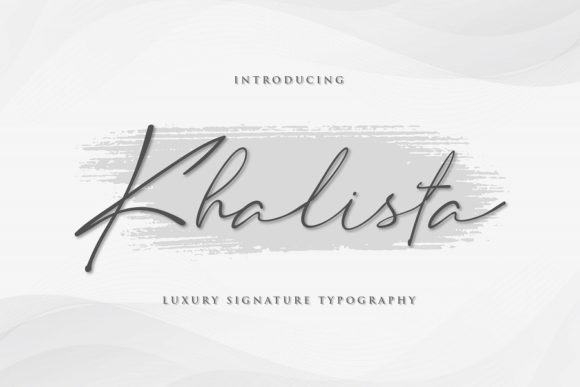
At its core, Khalista is a premium font designed to emulate the fluidity and elegance of natural handwriting. But what sets it apart from a simple handwritten font is its careful balance. The letterforms have a graceful, flowing rhythm with beautiful, connecting strokes that feel organic and unrestrained. Yet, there's an underlying structure that ensures each character remains distinct and legible. It avoids the overly swashed or ornate style that can sometimes sacrifice readability for flair.
The visual personality of Khalista leans toward modern romance and artisanal quality. It feels both contemporary and timeless. You can imagine it on a high-end chocolate wrapper, a wedding stationery suite, or the logo for a boutique coffee roaster. Its appeal lies in its ability to feel luxurious without being pretentious, and personal without being messy. For designers, this is a critical quality. A script font like Khalista can act as a powerful display font for headlines, instantly setting a creative and approachable tone for a brand or project.
Where Khalista Truly Shines: Practical Applications for Creators and Brands
Understanding a font's personality is one thing; knowing where to apply it is where the real value lies. The strength of Khalista is its remarkable versatility across different mediums. It’s a creative font that can elevate a wide array of projects, but its effectiveness depends on context.
In the realm of brand identity, Khalista is a natural fit for businesses that want to communicate care, quality, and a human touch. Think of a local bakery, a handmade jewelry shop, a yoga studio, or a freelance photographer. Using it for a logo or main wordmark immediately suggests that the business values craftsmanship. When paired with a clean, neutral sans serif font for body text, it creates a beautiful and professional font pairing that establishes a clear visual hierarchy—the script draws the eye, while the sans serif delivers the information cleanly.
For packaging design, the font is a standout. It can transform a simple label into a story. On a bottle of artisanal hot sauce, a jar of homemade jam, or a box of organic tea, Khalista communicates the product's origin and care. Its use in editorial design is equally compelling. A magazine feature, a blog header, or a chapter title in an e-book can use Khalista to add a touch of elegance and break the monotony of standard serif fonts or sans serifs.
Don't overlook its power in digital spaces. For social media graphics, a quote overlay using Khalista can feel more intimate and engaging than the same quote in a standard block font. It’s perfect for creating standout Instagram stories, Pinterest pins, or Facebook post headers. For web design, it can be used sparingly but effectively for hero section callouts, special announcement banners, or "About Us" section headers to add personality without compromising the site's overall usability and load times.
Integrating Khalista into Your Workflow: A Practical Guide
Choosing a font is an aesthetic decision, but implementing it well is a technical one. Here’s how to get the most out of Khalista as a commercial font in your projects.
First, always evaluate the project fit. Ask yourself: does the tone of my project require a personal, handwritten element? Khalista is perfect for invitations, branding for creative businesses, product labels, and artistic portfolios. It would be less appropriate for a technical manual, a corporate financial report, or legal documentation where absolute clarity and formality are paramount.
Next, consider readability. This is where many script fonts fall short. Test Khalista at the size you intend to use it. For headlines and large display text, its elegant swashes and connections are a feature. For small body copy, however, these same features can become a liability. The golden rule is to use it for impact, not for lengthy paragraphs. Pair it with a highly legible serif font or sans serif font for supporting text. For example, combine Khalista with a font like Lato or Open Sans for a modern, balanced look.
Review the included styles and character sets. A quality premium font like Khalista often comes with more than just the basic letters. Look for stylistic alternates, ligatures, and swashes. These extra glyphs can be accessed through your design software's OpenType features and allow you to customize the look, substituting a more ornate 'h' or a connected 'th' to perfect your design. This level of detail is what separates amateur typography from professional modern typography.
Finally, understand the licensing. As a commercial font, Khalista comes with a license that outlines how it can be used. This is a crucial step for any professional. Whether you're a freelancer, a small business owner, or a publisher, ensure the license covers your intended use—be it for a client's logo, product packaging for sale, or digital and print marketing materials. Respecting the license supports the type designers who create these valuable design assets.
In the end, a font like Khalista is more than a set of letters; it's a tool for storytelling. By understanding its character and applying it thoughtfully, you can add a layer of authenticity and charm to your work that resonates deeply with your audience, turning a simple design into a memorable experience.