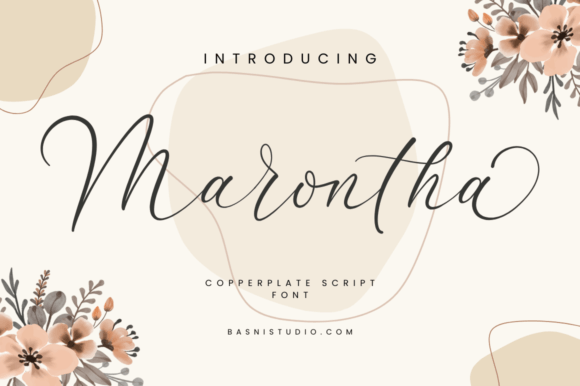
Marontha: Blending Natural Flow with Copperplate Precision
The Unique Personality of Marontha
When you first encounter Marontha, there is an immediate sense of contradiction that somehow works perfectly. It combines the organic, flowing nature of a script font with the sharp, architectural precision of Copperplate calligraphy. You don’t often see these two worlds meet so seamlessly. Typically, a handwritten font feels loose and casual, while a Copperplate style feels formal and rigid. Marontha sits right in the middle, offering a creative font solution that feels both personal and highly professional.
The defining characteristic here is the "natural" aspect. The strokes don't look like they were drawn by a computer algorithm. They have a tactile quality, mimicking the pressure of a broad-nib pen hitting paper. However, because it is rooted in the Copperplate tradition, the letterforms maintain a strict consistency. The x-height is deliberate, the slant is uniform, and the spacing is calculated. For a designer or business owner, this means you get the warmth of a handwritten font without the chaos that often makes script difficult to read in smaller sizes.
This duality makes Marontha a standout premium font. It doesn't scream for attention with wild swashes; instead, it commands respect through structure and rhythm. It is a typeface that understands its job is to communicate, not just decorate. Whether you are working on a brand identity for a luxury spa or a high-end bakery, this font brings a specific kind of elegance that feels earned rather than applied.
Real-World Applications: From Branding to Editorial
Understanding a font’s personality is one thing, but knowing where to deploy it is where the real strategy comes in. Marontha is incredibly versatile, but it shines brightest when used with intent. Here is how different professionals can leverage this typeface.
Logo Design and Brand Identity
For entrepreneurs and brand strategists, logo design is often the first hurdle. A logo needs to be memorable, scalable, and reflective of the brand's values. Marontha works exceptionally well for brands that want to appear approachable yet established. Think about a boutique hotel, a custom jeweler, or a high-end florist. Using Marontha as the primary wordmark creates an immediate sense of craftsmanship.
Because it is a serif font hybrid with script influences, it pairs beautifully with clean, geometric sans-serifs. You can use Marontha for the main logo and a simple sans serif font for the tagline or supporting text. This contrast creates a strong visual hierarchy, ensuring the brand name pops while the supporting information remains legible.
Editorial and Packaging Design
If you are a publisher or a blogger, typography is your bread and butter. In editorial design, headers need to grab the reader's eye immediately. Marontha serves as a striking display font for magazine covers, blog post titles, and pull quotes. Its Copperplate roots give it a classic editorial feel, reminiscent of vintage literature, while its natural flow keeps it from feeling stuffy.
In the world of packaging design, shelf appeal is everything. Consumers often make split-second decisions based on visual cues. Marontha suggests quality and attention to detail. Imagine this font on a bottle of artisanal olive oil or a box of handmade chocolates. The typography instantly tells the customer that the product inside is crafted with care. It elevates the perceived value of the product before the customer even opens it.
Digital Presence and Web Design
Web design requires a careful balance between aesthetics and functionality. While Marontha is a display font, it holds up surprisingly well on digital screens when used for headers and navigation buttons. It adds a human touch to the often sterile environment of user interface design. For social media graphics, it is a powerful tool. In a sea of generic text overlays, a distinct typeface like Marontha stops the scroll. It is perfect for Instagram quotes, Pinterest pins, and YouTube thumbnails where you need to convey a message quickly and stylishly.
Technical Strengths and Typographic Flexibility
A beautiful design means nothing if the technical execution fails. This is where Marontha truly proves its worth as a commercial font. It encompasses a comprehensive character set that goes beyond basic Latin letters. This is crucial for modern businesses that operate in global markets.
The inclusion of multilingual support means you can maintain your brand voice whether you are writing in English, French, German, Spanish, or many other languages. There is nothing worse than finding the perfect font only to realize it lacks the accents or diacritics needed for your specific audience. Marontha solves this problem, ensuring your brand identity remains consistent across all regions.
Furthermore, the font includes a variety of ligatures and punctuation marks. Ligatures are the connecting strokes between letters that make script fonts look natural. Without them, a script font can look disjointed, with letters awkwardly bumping into one another. Marontha’s ligatures are carefully designed to create a smooth, cursive flow. This attention to detail makes the text look like it was actually hand-lettered for that specific project.
Practical Guidance for Choosing Marontha
As a designer or creative professional, choosing a creative font involves more than just aesthetics. You need to evaluate the fit of the project and the practical constraints of the medium.
Evaluating the Project Fit: Before selecting Marontha, consider the tone of your project. If you are designing for a tech startup that wants to appear ultra-modern and minimalist, a Copperplate-inspired script might feel too traditional. However, if the project involves luxury, heritage, craftsmanship, or personal connection, this font is an ideal match. It bridges the gap between a modern typography aesthetic and classic elegance.
Testing Font Pairings: Never use a display font in isolation. Marontha needs a partner. Because it has high visual interest, pair it with something neutral. A clean sans serif font like Helvetica, Roboto, or Open Sans works wonders. Use Marontha for the headlines to set the mood, and the sans-serif for the body copy to ensure maximum readability. This contrast allows the hierarchy to function naturally.
Readability Considerations: While Marontha is designed for precision, it is still a script-based typeface. Avoid using it for long paragraphs of body text or small legal disclaimers. It is meant to be seen, not read in bulk. Use it for short, impactful messages: a hero banner, a product name, or a greeting card message. At larger sizes, the intricate details of the serif font elements and the ink strokes become visible, adding texture to your design.
Licensing and Assets: Always review the licensing terms of any design assets you purchase. Ensure that the commercial font license covers your intended use, whether it is for a client project, merchandise, or a digital app. Marontha is built as a professional tool, so understanding how to legally implement it across various platforms is part of the workflow.
Ultimately, Marontha is more than just a collection of letters. It is a strategic tool for visual communication. It offers the reliability of a structured typeface