Mint Condition: A Stylish Script for Authentic Branding
There’s a specific challenge in modern design that often gets overlooked: the quest for authenticity. In a world dominated by sterile sans serif fonts and rigid grid systems, finding a typeface that feels genuinely human can be difficult. You want something that looks professional, yet personal. Polished, yet organic. This is exactly the gap that Mint Condition was designed to fill. As a premium script font, it offers a natural, handwritten aesthetic that bridges the distance between a brand and its audience.
The Anatomy of a Modern Script Font
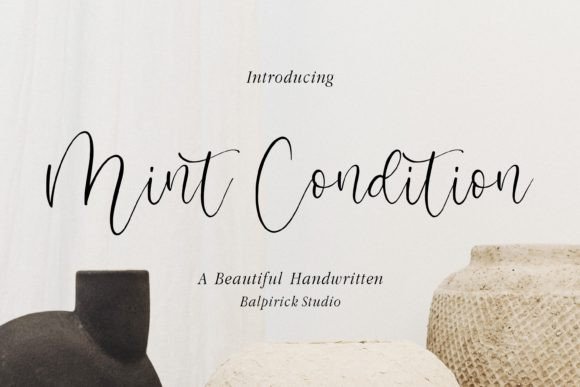
When we talk about Mint Condition, we aren't discussing a standard "cursive" font that looks like it was pulled from a 1990s word processor. This is a modern typeface crafted with attention to the nuances of real handwriting. The visual characteristics are defined by a fluid baseline and variable stroke widths, mimicking the pressure of a felt-tip pen or a high-quality brush marker. It possesses a distinct rhythm—letters connect naturally, but not in a way that compromises legibility.
The "personality" of this font is approachable and stylish without being overly formal. It avoids the extreme loops and swashes that can make script fonts look dated or overly feminine. Instead, Mint Condition leans into a contemporary, gender-neutral vibe. It feels like a font you’d see on the packaging of a boutique coffee brand or the header of a high-end lifestyle blog. The appeal lies in its versatility; it commands attention as a display font but remains comfortable to read in short bursts.
Strategic Applications: Where Mint Condition Shines
Understanding where to deploy a creative font like this is half the battle. As a designer or business owner, you have to match the font's energy to the medium.
Branding and Logo Design
For logo design, Mint Condition is incredibly effective for industries that rely on trust and personal connection. Think of wedding planners, boutique bakeries, wellness coaches, or artisanal product makers. Because it functions as a display font, it should be reserved for the logo mark or the primary headline. Pairing it with a clean, geometric sans serif font for body text creates a necessary contrast that keeps the design grounded.
Digital Presence: Web and Social Media
On the web, typography can make or break the user experience. While you wouldn't use Mint Condition for an entire blog post (that would strain the eyes), it is perfect for headers, pull quotes, and call-to-action buttons. Its organic feel draws the eye immediately. For social media graphics, this font is a powerhouse. In the fast-scrolling environment of Instagram or Pinterest, a handwritten font stops the thumb. It makes a promotional post feel less like an advertisement and more like a note from a friend.
Editorial and Packaging Design
In editorial design, such as magazine layouts or book covers, Mint Condition adds a layer of editorial flair. It works beautifully for subheadings that need to feel expressive. Similarly, in packaging design, particularly for organic foods, cosmetics, or stationery, the font communicates "handmade" and "quality" without a single word of copy. It suggests that the product inside was crafted with care.
The Mechanics of Good Design: Hierarchy and Readability
One of the biggest mistakes I see in design projects is the misuse of hierarchy. Visual hierarchy is about guiding the viewer's eye to the most important information first. Mint Condition is a tool for emphasis. When you use a script font for your main headline and a serif font for your subheadline, you create a clear distinction between the two elements.
However, readability is paramount. Even the most beautiful premium font fails if the audience can't read it. Mint Condition performs best at larger sizes. When used in web design or print, ensure the font size is generous—typically 24pt or larger. Avoid using it for long paragraphs of body text; script fonts are generally not designed for extended reading on screens. By reserving Mint Condition for impact moments, you maintain professionalism and ensure your message is communicated instantly.
Practical Guide: Integrating Mint Condition into Your Workflow
If you are considering adding this typeface to your design assets, here is how to evaluate and implement it effectively.
Evaluating Font Pairings
The success of Mint Condition often depends on its partner. Because it is a script font with a lot of movement, it requires a stable counterpart. A classic serif font can give it a vintage, editorial look, while a bold sans serif font will make it feel more modern and urban. Avoid pairing it with other decorative or handwritten fonts, as this creates visual chaos.
Checking the Details
Before finalizing a project, review the included styles. High-quality fonts often come with alternate characters and ligatures. These are variations of specific letters (like 'a' or 'g') that can be swapped out to prevent repetition and make the text look even more authentic. Take the time to toggle these features in your design software to see if they improve the flow of your specific words.
Licensing and Usage
Finally, respect the commercial font licensing. If you are using Mint Condition for a client’s brand identity, a t-shirt design, or a digital product for sale, you need the appropriate license. This isn't just about legality; it's about supporting the typographers who create these tools. Always double-check the terms to ensure your usage—whether for web, print, or merchandise—is covered.
Ultimately, Mint Condition is more than just a collection of vector paths; it is a strategic asset. By using it thoughtfully, you can inject personality and warmth into your projects, helping your brand stand out in a crowded digital landscape.