Belyta: The Handwritten Font That Feels Like a Love Letter
There’s a certain magic in a handwritten note. It carries an authenticity, a warmth, and a personal touch that a perfectly typed document simply can’t replicate. In the world of design, capturing that essence is a powerful tool. This is where Belyta enters the conversation—not as just another script font, but as a versatile voice for projects that need to speak directly to the heart. It’s a relaxed and cursive handwritten font, but its true strength lies in its adaptability. Think of it less as a single style and more as a spectrum of feeling, ready to be applied from a delicate greeting card to a bold, expressive headline.
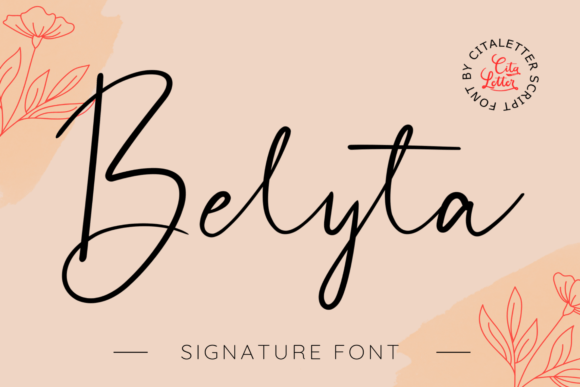
Visually, Belyta strikes a beautiful balance. Its letterforms flow with a natural, organic rhythm, mimicking the slight inconsistencies and gentle curves of genuine handwriting. The connections between letters are smooth and intuitive, creating a sense of continuity that guides the eye effortlessly across a word or phrase. It avoids the extremes of being overly casual or too formal, landing in a sweet spot that feels both approachable and refined. The overall personality is romantic, soft, and inherently human, making it a fantastic choice for any project aiming to forge an emotional connection.
Where Belyta Truly Shines: Beyond the Greeting Card
While its application in greeting cards, wedding invitations, and personal stationery is a natural fit, Belyta’s utility as a premium font extends far into professional and commercial realms. For entrepreneurs and small business owners building a brand identity, this typeface can be a secret weapon. Imagine it used for a boutique bakery’s logo, the header on a skincare product’s website, or the title of a lifestyle blog. It immediately injects personality and a handcrafted feel, suggesting care, quality, and a personal touch without sacrificing clarity.
In marketing and content creation, Belyta excels as a display font for creating visual hierarchy and emphasis. It pairs wonderfully with clean serif fonts for editorial design or modern sans serif fonts for web design and social media graphics. Use it for a pull quote in a magazine layout, the title of a Pinterest pin, or a call-to-action on a landing page. Its romantic style makes it particularly effective for industries like wedding planning, beauty, wellness, food and beverage, and artisanal crafts. For publishers, it can add charm to chapter headings in a book cover design or create a distinct voice in a newsletter masthead.
Making It Work: Practical Guidance for Designers and Creators
Choosing the right font is about more than just aesthetics; it’s about function and fit. Before integrating Belyta into your project, consider its role. As a script font, it’s generally best used for short, impactful text—headlines, logos, quotes, and callouts—rather than for long paragraphs of body copy, where a highly legible serif or sans serif font is preferable. Its readability at smaller sizes can vary, so always test it in the context of your design. View it at the intended scale on both a desktop screen and a mobile device to ensure it remains clear.
Evaluating project fit is key. Does your brand or project call for a personal, romantic, or artisanal voice? If the answer is yes, Belyta is a strong candidate. If your project demands a stark, minimalist, or highly technical tone, you might look elsewhere. A critical step is testing font pairings. Belyta’s handwritten nature means it needs a stable, neutral partner. Try pairing it with a sturdy geometric sans serif for a modern contrast, or a classic serif for a more elegant, traditional feel. The contrast prevents visual competition and establishes a clear hierarchy.
Don’t overlook the details within the font family itself. Check if the Belyta you’re considering includes alternate characters, ligatures, or stylistic sets. These features are the hallmark of a well-crafted creative font, allowing you to customize the look, vary the connection points between letters, and avoid repetitive shapes for a more authentic handwritten effect. Finally, always verify the commercial licensing. Ensure the license covers your intended use, whether it’s for a client project, merchandise, or digital products. Using a font correctly protects both you and the font designer.
In the end, a typeface like Belyta is more than a design asset; it’s a conduit for emotion. It’s the tool you reach for when you need your project to feel less like a corporate announcement and more like a conversation. By understanding its strengths, testing its applications, and pairing it thoughtfully, you can leverage this versatile script font to add that guaranteed romantic feel and human touch to your next project, making it resonate deeply with your audience.