Smith Script: The Versatile Font for Modern Brands
Every designer hits that wall eventually. You're staring at a blank canvas, and the project demands a typeface with personality—something that feels human, crafted, and full of character. Generic sans serifs won't cut it, and overly ornate scripts can feel dated. You need a premium font that bridges the gap between playful elegance and professional versatility. Enter Smith. It's not just another script font; it's a tool built for real-world application, from logo design to packaging design, and everything in between.
The Anatomy of a Modern Handwritten Font
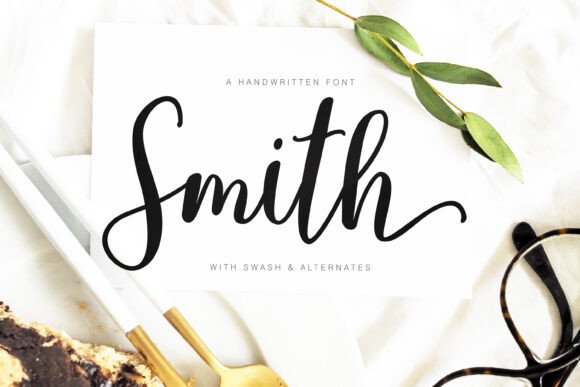
At first glance, Smith presents a fluid, confident aesthetic. It strikes a careful balance between the spontaneous feel of a handwritten font and the structural integrity required for commercial fonts. The characters feature elegant swashes and a natural flow, but they avoid the illegibility that plagues many decorative scripts. This makes it a standout display font that doesn't sacrifice readability for style.
What sets Smith apart in the crowded market of modern typography is its thoughtful construction. It includes a complete set of uppercase and lowercase letters, numerals, and punctuation. But beyond the basics, the font is packed with alternate glyphs. These stylistic alternates allow you to customize the look of your text, ensuring that your brand identity feels unique rather than templated. Whether you are designing a wedding invitation or a coffee bag, the versatility is baked right into the typeface.
Technical Excellence Meets Creative Freedom
For the practical designer, the technical specs of Smith are just as impressive as its visual flair. It utilizes PUA Unicode encoding, which is a technical way of saying that accessing those special characters and alternates is effortless. You don't need to be a software wizard to use the full range of glyphs; they are accessible in virtually any design software. Furthermore, Smith offers robust multilingual support. If your brand identity crosses borders—or if you simply need to type a client's name correctly with the right accents—this creative font has you covered.
Where Smith Truly Shines: Practical Applications
Theory is nice, but application is everything. Where does a script font like Smith actually belong in your workflow? Because of its legibility and charm, it excels in environments where connection and warmth are paramount. It is a natural fit for the lifestyle, fashion, food, and beauty sectors.
- Product Packaging: Imagine a label for artisanal honey or a high-end skincare bottle. Smith provides that "hand-crafted" feel without looking sloppy. It suggests care and quality, influencing the consumer's perception before they even use the product.
- Social Media Graphics: In the fast-scrolling world of Instagram and TikTok, you need social media graphics that stop the thumb. Smith works beautifully for quotes, announcements, and headers, adding a personal touch that static corporate fonts lack.
- Greeting Cards and Merchandise: From mugs to tote bags, Smith is a top-tier choice for merchandise. Its wide character set allows for creative layouts, making it a favorite for crafters and print-on-demand entrepreneurs.
However, it's not just for physical products. Smith holds its own in digital spaces as well. When used sparingly for headers or call-to-action buttons on a website, it can break up the monotony of standard web fonts and draw the eye exactly where you want it.
Mastering Hierarchy and Pairing
Using a display font effectively requires strategy. You rarely want to set an entire paragraph in a script font—it becomes a visual headache. The real power of Smith lies in creating contrast and visual hierarchy.
As a general rule, pair Smith with something clean and neutral. A crisp sans serif font makes an excellent companion. For example, use Smith for the main headline to inject personality, and pair it with a geometric sans serif for the body text to ensure clarity. This combination creates a professional yet approachable vibe. Alternatively, pairing it with a classic serif font can evoke a more traditional, editorial look suitable for lifestyle magazines or high-end invitations.
When evaluating the fit for your project, consider the "voice" of your content. Smith speaks with a tone of friendly sophistication. If your brand is ultra-modern, minimalist, or industrial, this might not be the right match. But if your audience values authenticity, warmth, and creativity, Smith aligns perfectly with that message.
Final Thoughts on Workflow and Licensing
Before you dive in, always test your font pairings in context. Don't just look at the letters side-by-side; mock them up in your actual design. Check the spacing, the kerning, and how the alternates interact with your other design assets. Because Smith is a premium font, it comes with the stability and licensing required for commercial work. Whether you are a freelancer working on a client's brand identity or a small business owner creating your own materials, understanding the license ensures you can use this typeface confidently across all your platforms.
Ultimately, Smith is more than just a collection of curves and lines. It is a versatile asset that adapts to your creative needs, helping you deliver work that feels polished, personal, and professionally crafted.